
What is the Big Five?
The Big Five (Five Factor Model) is the closest thing psychology has to a scientific consensus on personality — five traits, thirty facets, measured as continuous scores, not types.
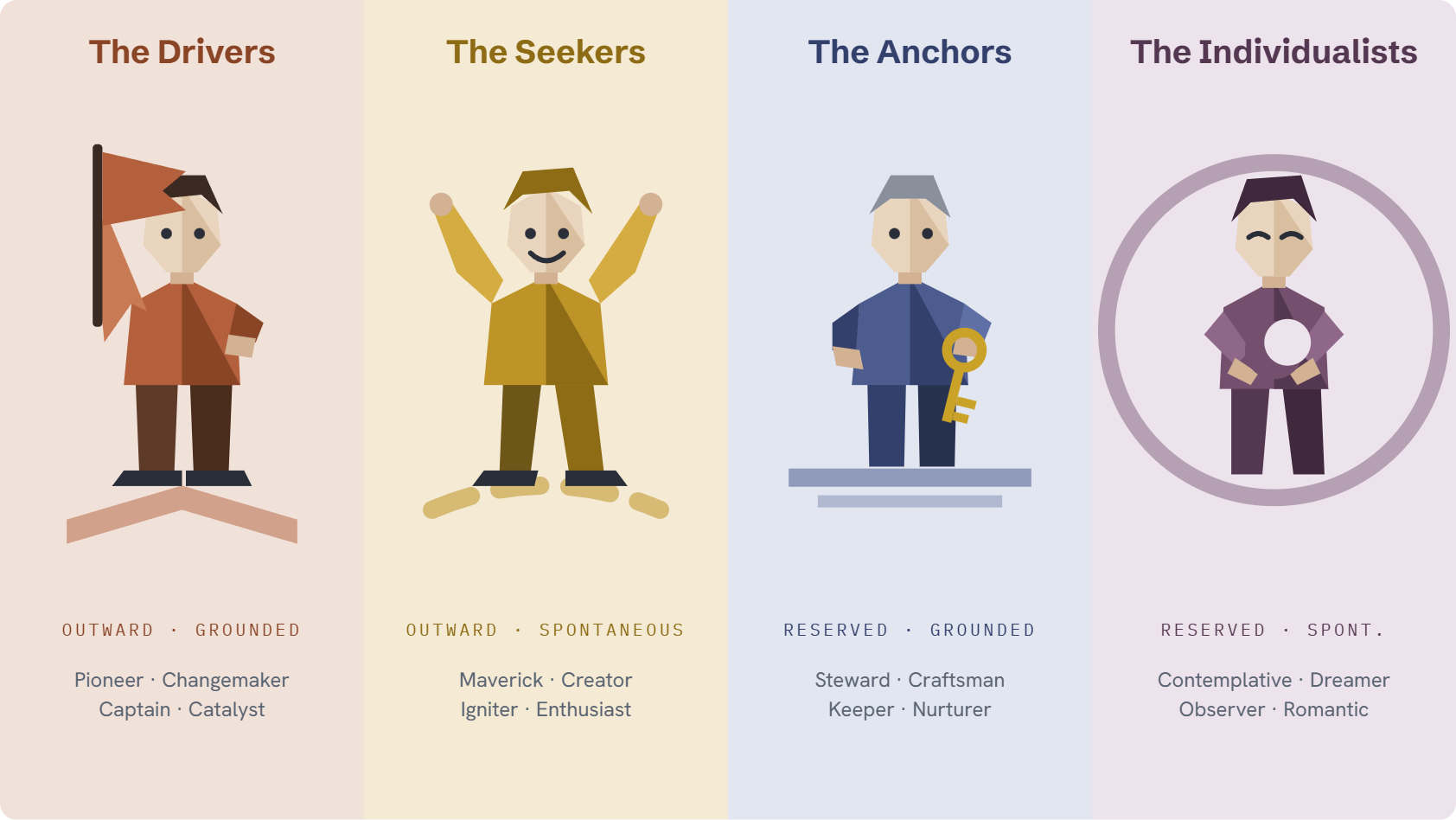
How our 16 archetypes work
Your archetype is a memorable label built on top of your Big Five scores — derived from two published metatraits, shown as a blend, never a forced either/or type.

Big Five vs. MBTI vs. DISC
MBTI is engaging but unreliable; DISC is a useful workplace vocabulary, not a personality measure. Here is how the three frameworks compare — and why the Big Five holds up.

Can your personality change?
Personality is stable but not fixed. Ordinary life barely moves your traits — but a specific goal, a structured plan, and months of follow-through genuinely change them, and the change holds.

What predicts relationship compatibility?
Compatibility scores oversell what the science can support. Your own personality — especially Neuroticism — predicts relationship satisfaction far better than how well your traits "match" a partner's.

Prepare for a job interview
Employers use personality tests in hiring. Knowing your Big Five profile before you interview means walking in with a clear read on your strengths and blind spots — and a plan for both.

Can I become more disciplined?
Yes — discipline can grow. Research shows a specific goal, an if-then plan, and months of follow-through reliably raise Conscientiousness. Here is what works, and what doesn’t.